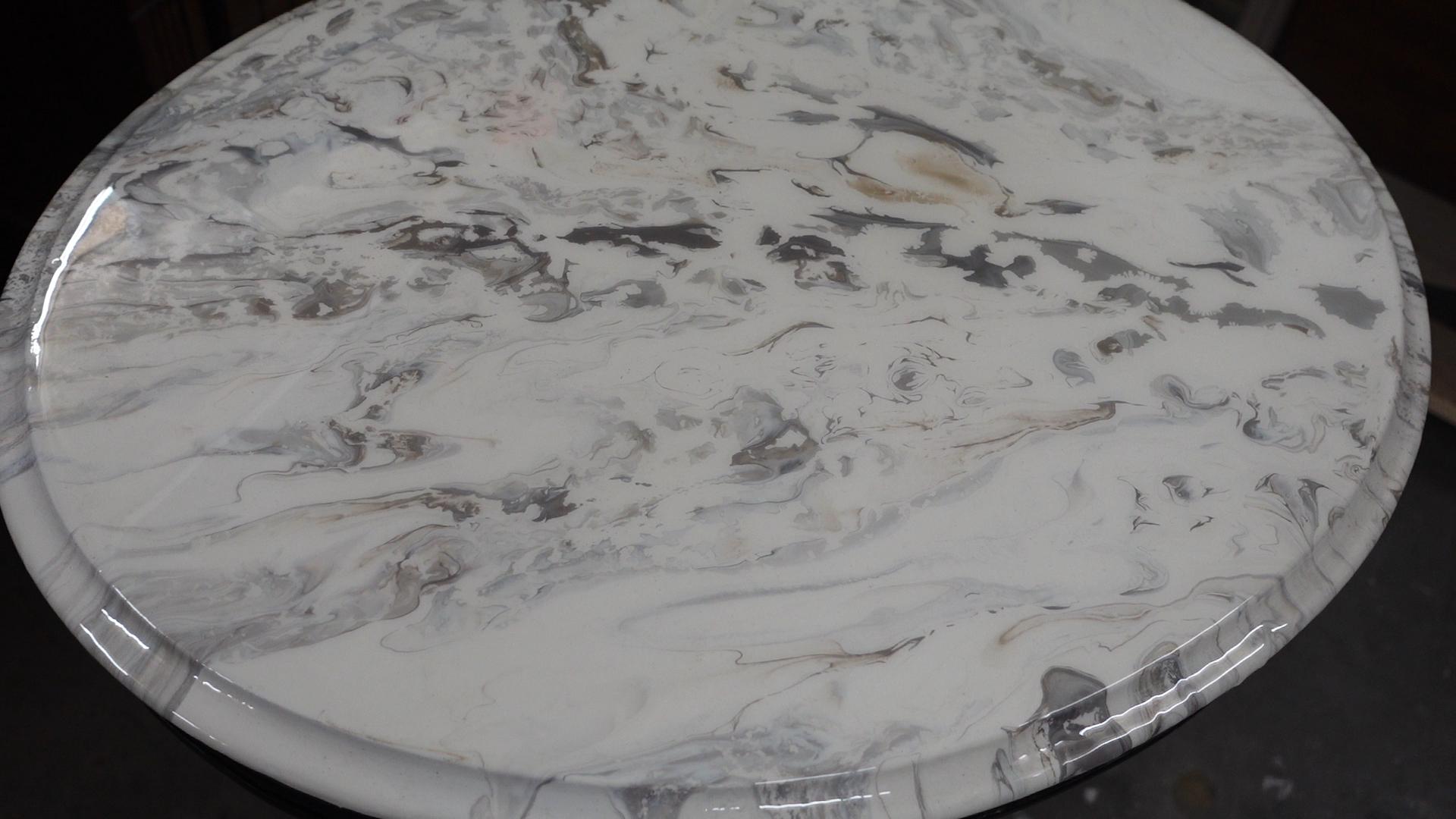
As a furniture artist/flipper I utilize many different techniques on my pieces to achieve the desired results; one of those mind-blowing techniques is called Dutch Pouring, and it’s a game changer in the furniture flipping world.
The Victorian Era is probably my favorite when it comes to furniture style. Victorian style generally has ornate and elaborate designs and carvings. It’s a display to all about what the home it sat in was like. Some Victorian pieces took it a step further by adding beautiful marble tops to their tables, while some still remained in the traditional Walnut or Mahoghany this period is so famous for. They were a testament to all about the money within the walls of the home. The more ornate and lavish the pieces were, the higher in society the owners were. As a furniture flipper I am always on the lookout for pieces, and I have amassed quite the selection of pieces from the Victorian era that need some love and attention. Quite a few of these pieces were from the lower end of things. Still incredibly beautiful, but lacking the marble top these pieces were begging for. The Dutch Pouring technique now makes it possible to add this touch to those pieces in a way that is both convincing and appropriate for the design and the period.

Dutch Pouring is essentially the art of pouring fluid paints together and using air and gravity you manipulate the desired effect. It’s actually awe inspiring and mind blowing to watch. You can watch this transformation in under 40 seconds by clicking here. It’s spectacular AND it’s easy.
The Process
To start you want to make sure your piece is prepped and primed. When I’m working with antique pieces or even darker wood-stained pieces, I like to seal the piece with a clear shellac to prevent tannins from coming through. Tannins are compound elements found in various wood that make up the hue and tone. Those hues and tones tend to bleed through, even primer and that can ruin the piece. Mahagony and Walnut are constant culprits of this horrible reaction. The older the piece the more apt it is to have a tannin bleed through issue, so I find sealing it is always best. If you’re priming it without a sealer, just make sure that you prime the piece as many times as necessary until the tannins no longer come through. I’ve had to put 5 layers on a project once. It is what it is, and each piece is different. I also let my primed piece sit overnight to make sure that it is cured entirely before beginning my Dutch Pour process.

You’ll need to choose paints. You’ll want a white for the base and then as many tones of whatever color you want to add to the piece, including metallic touches. These paints need to be in a fluid state… something akin to warm glowing honey. You can use water to dilute the paint a bit, but water will also remove the pigment and alter the bond, and this technique requires really good adhesion. I use a product called Flowtrol. It’s an additive specifically made to make paint more fluid and to eliminate brush strokes. it’s the perfect product for this technique. For my project I choose tones of gray, white and a couple metallic tones, gray and a brushed nickel. I added each color to a small cup and then added a small amount of the Flowtrol until I felt it had achieved the fluid state I was seeking. There is no formula for this, so I started adding slowly until I achieved the desired results.

This process is messy so you’ll want to have a large box lined with plastic to set this in. The object of this technique is to let the paint run off the piece, creating veining and details you can generally only find in real marble. If you don’t have a large enough box, set down a tarp. I also wanted to protect certain areas of my piece from any chance of paint landing on it and ruining it, so I covered my piece in plastic taping it well and even put baggies over the legs taped in place to ensure full protection from the puddle destined to come.

Start by pouring your base color, and you’ll want to make sure you pour enough to cover the piece and also apply it thick. You want it to be thick amount for the base. This is what will help the other colors mix and blend into the base. I also left my base just a bit thicker than the other paints so it would stay better on the top surface allowing me to add the colors to it’s thick coating. You’ll want to spread the base almost to the edges but don’t worry about getting them covered yet. It’s gonna happen. Next start applying your colors in layers. You can add them any way you want, circles, squiggles, lines… I’m using the circle method and I’m just gonna start layering the paints on top of each other in varying amounts and in no particular order.

Now comes the fun part, using a hair dryer, a straw and gravity I am gonna mix these colors all around. To see the true effect of this amazing process, click HERE to watch the full tutorial. I start by giving short, full speed blast of air from by hairdryer starting in the center of each circle and working my way around and outward. There are no rules here. This is all you and your eye. Once I get it spread out nicely and it’s starting to resemble marble, I want to slide the paint in all directions, expanding the illusion and softening the veining and coloring. Then, to finish I use a regular drinking straw and my own air, and I start blowing the paint intentionally where I think it should be. You can get really creative here and start laying out your marble pattern as you see it, while making sure that the paints coat all the edges all the way around. This lends to the appearance of real marble as well as it creates the rippled and veined look in a continuous and realistic flow.


Once your satisfied, leave the table to sit and cure. I came back every 25 minutes for a couple hours to remove the drips that inevitably collect on the underside of the top, and by keeping up with them until the paint set and was no longer rolling off I had none that I needed to address once the piece cured. I left it to cure overnight in my heated studio. When I came back in the morning I was absolutely surprised.


I had expected to find my piece exactly as I left it, and instead I found it had changed even further as it cured. I still very much liked the pattern and found it to hold its realistic vibe so I was ready to seal it. I put a lot of time and thought into the perfect sealer for this. I needed durability with all these layers of paint. If it was to get scratched off or chipped the look would be ruined so I knew regular poly or even shellac wouldn’t be enough. I decided to go with a pour on, high gloss epoxy and it was exactly what it needed to finish this beautiful piece off. it does take a good 3 days to cure and even then, I gave it an additional 3 more days to make sure it cured solid and handling it wouldn’t result in fingerprints imprinted on the surface.

This technique is spectacular, the results are stunning, and this is a game changer in the world of furniture flipping, or even if you have a table of your own and you’ve always known something was missing… here you go. Elevate it, bring it back to life or better yet, give it a life it never knew it could have. This technique will get lots of use for my business and it will transform pieces to places I never knew they could go.


Leave a Reply